


 As legend has it, a long time ago a lady named Amaterasu had nothing better to do so she took a long stick and stirred up the Pacific Ocean. The mud that dripped from the wood fell to the earth and the islands of Japan were formed.
Needless to say, Amaterasu had to be one huge woman to hold such a large piece of wood so she was made into Japan’s first Goddess. Generally, in the west, large women of the size of Amaterasu are called “Amazons,” or “Centers” in the Women’s NBA. But, this being Japan and all, a Goddess she would be. And Goddess she would remain to this day among Shinto mythology.
In order to understand any contemporary society, a knowledge of its history is essential.
Archaeologists agree that the history of Japan began about 13000 BC, give or take a few years. The inhabitants of the Japanese islands were gatherers, fishers and hunters. About 300 BC Japan became a nation state.
At that time, rice was imported into Japan. With the introduction of agriculture, social classes started to evolve. Chinese travelers to Japan reported that a queen called Himiko reigned over Japan at that time. A woman queen!? 2,300 years ago? Kind of like a Japanese Cleopatra!
Buddhism was introduced to Japan about 540. There was a prince named Prince Shotoku, and he is said to have played an especially important role in promoting Chinese ideas. He also wrote the Constitution and the theories of Confucianism and Taoism.
In 645, Nakatomi no Kamatari started the era of the Fujiwara clan that was to last until the rise of the samurai in the 11th century. In the same year, land reforms were made: A new government and administrative system was established after the Chinese model. All land was bought by the state and redistributed equally among the farmers in a large land reform in order to introduce a new tax system. Ah hah! So Nakatomi no Kamatari was 1200 years before Communism! But, let’s just stay with Karl Marx as that is much easier to pronounce!
 The first permanent Japanese capital was established in Nara. It included large Buddhist monasteries. These monasteries quickly gained such strong political influence that, in order to protect the position of the emperor and central government, the capital Kyoto moved in 794 where it remained for over one thousand years.
A thousand years? Think about that! England wasn’t even a country at that time and the Japanese have already packed up and moved their capital city several times by then. Sure would have been a good idea to own a moving service back in those days!
Time went by and brought a gradual decline of Chinese influence. Many of the imported ideas were gradually “Japanized.” In the arts too, native Japanese movements became increasingly popular. The development of the Japanese writing system made the creation of actual Japanese literature possible.
Among the worst failures of the time were the land and taxation reforms (no surprise there): High taxes resulted in the impoverishment of many farmers who then had to sell their properties and became tenants of larger land owners. As a result, the state income decreased, and over the centuries, the political power steadily shifted from the central government to the large independent land owners.
The Fujiwara family controlled the political scene over several centuries through strategic intermarriages with the imperial family and by occupying all the important political offices. The power of the clan reached its peak in the year 1016. But the government continued to lose power and many land owners hired Samurai for the protection of their properties. That is how the military class became more and more influential, especially in Eastern Japan.
In the 12th century, The Taira replaced many Fujiwara nobles in important offices while the Minamoto gained military experience by bringing parts of Northern Honshu under Japanese control in the Early Wars against the “savages” who lived in the Northern islands of Japan.
After 1159 Taira Kiyomori became the leader of Japan and ruled the country from 1168 to 1178. The major threats with which he was confronted were not only the rivaling warlords but also the increasingly militant Buddhist monasteries which frequently led to wars between each other and disturbed public order.
Imagine that! Buddhist Monks running around causing a public scene! What was the world coming to? Can you imagine a scene where you are walking through some town, minding your own business — then like a scene out of the Old West a fight breaks out. But instead of guys shooting each other, you’ve got ten or twenty bald Buddhist monks karate chopping and Kung-Fu fighting in the city square!
After Kiyomori’s death, a war for supremacy was fought and Minamoto Yoritomo became the leader of Japan. After eliminating all of his potential and dangerous enemies, including close family members — I guess they must not have been that "close" — he was appointed Shogun (highest military officer) and established a new government in his home city of Kamakura.
 I’ve been there many times! It’s really cool!… No, not Yorimoto’s house…. Kamakura, I mean. That’s where this huge Golden Buddha statue sits.
At that time, the Zen Buddhists found large numbers of followers among the Samurai, which were now the leading social class.
A new legal code was passed. It stressed Confucian values such as the importance of loyalty to the master, and generally attempted to suppress a decline of morals and discipline — Yeah, well I guess they had trouble with snotty-faced kids even a thousand years ago. Tight control was maintained, and any signs of rebellions were crushed immediately.
This time brought several decades of peace and economic expansion to the country until an external power began to threaten Japan.
 By 1259, the Mongols had conquered China and became also interested in Japan. Several threatening messages from the powerful Mongols were ignored by Kamakura. (Hell, I always ignore my mail too! It’s not like the Mongols were writing to say “hello!”)
The Japanese disregarded the Mongols. So the Mongols felt insulted! Imagine that! The Mongols had conquered the world and these up-start Japanese were ignoring their mail! Well, they couldn’t have any of that! And this resulted in the first Mongol invasion attempt of Japan in 1274 on the island of Kyushu. After only a few hours of fighting, however, the large Mongol naval invasion fleet was forced to pull back because of bad weather conditions. This was very fortunate for the Japanese since their odds against the large and modern Mongol force were not good at all.
The Mongols had new technology, like the bow and arrow. And in an open area, they slaughtered the Japanese soldiers. But in a confined area, that was a different story all together.
 While the Mongol fleet sat at anchor at night off the shores of Japan, and it’s soldiers slept, groups of Samurai would take to small boats, silently board the Mongol ships, and ruthlessly slaughter the unsuspecting Mongol soldiers. The Mongol iron sword of the time was no match for the ultimate close-range offensive weapon of the day: The Japanese-made hardened steel Samurai sword. The Mongol iron swords would just shatter when hit against the blade of Samurai steel. At night, even though hugely outnumbered, one Samurai could kill dozens upon dozens of Mongol invaders. And then just melt away in the darkness.
And in the final Mongol attempt to invade Japan, a huge typhoon swept the entire Mongol fleet into the ocean. Tens of thousands of Mongol soldiers drowned. And the few hundred who were able to struggle ashore against the huge waves were mercilessly killed by the Samurai who waited for them on the beach.
Even with victory, the consequences of the many years of war preparations against the Mongols were fatal to the Kamakura government since they resulted only in expenditures and no profits — Needless to say they never read Ludwig Von Mises. And the Kamakura government fell.
Many of the loyal men who were fighting for Kamakura, were now waiting for their salary that the government could not pay. Hence, financial problems and decreasing loyalty among the powerful lords were some of the reasons for the fall of the Kamakura government. (Kind of reminds me of what’s going on in Iraq right now.)
By 1333 a man named, Go-Daigo was restored to imperial power. He was rumored to have looked like Jack Nicholson in the movie “The Shining” when he sticks his head through the bathroom door and says, “Here’s Johnny!”
Ashikaga Takauji, once a good buddy of Go-Daigo decided that he wanted to be the “big Sushi Chef” so he used his army and challenged the emperor to a fight. Go-Daigo got cold feet and decided to split, with his head still attached, and ran off to Kyoto. And just to add to the confusion, as the Japanese like to do, another emperor was appointed in Kyoto. This was all because of some family in-fighting between royalty — you know, brothers! Oh well, boys will be boys!
Two imperial courts existed in Japan for over 50 years: the Southern and Northern courts. They fought many battles against each other. The Northern court usually was in a more advantageous position; nevertheless, the South succeeded in capturing Kyoto several times for short time periods resulting in the destruction of the capital on a regular basis. In 1392, the Confederates, er, I mean, the Southerners gave up and the country became reunited again.
During the 15th and 16th centuries, the influence of the Shoguns and the government in Kyoto declined to zero. The political newcomers of the Muromachi period were members of land-owning, military families — The Samurai. A few of them achieved influence over whole provinces. These were the new feudal lords. They exerted the actual control over the different parts of Japan, and constantly fought civil wars.
I suppose so. When you’ve got a bunch of soldiers with nothing to do, running around with swords, gambling, drinking, and chasing wild women, I would imagine fights would break out occasionally.
In 1542 the first Portuguese traders and Jesuit missionaries arrived in Kyushu, and introduced firearms and Christianity to Japan.
Well, “Praise the Lord and Pass the Ammunition!”
The Jesuits undertook a mission to Kyoto in 1549—50. Despite Buddhist opposition, most of the Western warlords welcomed Christianity because they were keen in trade with overseas nations mainly for military reasons.
By the middle of the 16th century, several of the most powerful warlords were competing for control over the whole country. One of them was Oda Nobunaga. He made the first big step towards unification of Japan.
Now remember here that, at this time, the very first nation-states were emerging in Europe and it was the golden time of the Renaissance. Sure the Italians and French are painting great works of art, all the while the Japanese are loping off each others heads.
After establishing himself in Kyoto, Nobunaga continued to eliminate his enemies one by one — kind of like Joseph Stalin.
Rather fortunate for Nobunaga was that two of his most dangerous rivals died before they were able to confront him. Nobunaga defeated one of his rival clan’s making use of modern warfare — meaning they had “White man’s thunder sticks” and the other guys didn’t.
 But as seems a recurring them in Japanese history, friends become enemies and so Nobunaga’s top general, Toyotomi Hideyoshi, murdered Nobunaga and captured his castle. And under Toyotomi Hideyoshi, Japan was finally reunited.
In order to bring the country under absolute control, Hideyoshi destroyed many castles that were built throughout the country during the era of civil wars. In 1588 he confiscated the weapons of all the farmers and religious institutions in the “Sword Hunt." He forbade the Samurai to be active as farmers and forced them to move into the castle towns. He believed that a clear distinction between the social classes should increase the government’s control over the people.
Well, you’d think that after finally uniting Japan in 1588, Hideyoshi would be happy and contented with a life a luxury. After all, he had the entire country; he had all the food; all the gold and riches! He had the hottest babes and the top harem of Geisha to fulfill his every whim and wish…
What would you do if you were him? You’ve got it made. You have everything you could possibly want. You have all the money, the girls, everything. You’d sit back and enjoy it, right?
But odd, that Hideyoshi guy! That’s not what he does! He stated his claims that must have made some of the jaws of his top generals just drop to the floor, or tatami in this case.
Hideyoshi proudly announced to his (quite probably dumbfounded audience) that he would conquer China. And in 1592 the Japanese army invaded Korea and captured Seoul within a few weeks; however, they were pushed back again by Chinese and Korean forces in the following year. Hideyoshi stubbornly didn’t give in until the final evacuation from Korea in 1598, the same year in which he died.
I don’t know about you. But the lounging around with the Geisha sounds like a lot more fun than slugging it out with a bunch of angry Koreans and Chinese soldiers!
I should add here that the Chinese were ruthless fighters. The Chinese were the first to invent fireworks so it stands to reason that they were the first to invent the cannon. But early Chinese cannons did not fire “shot” (cannon balls). No, the Chinese were much more ingenious and devious than that!
You have to remember that, back in those days, war was a considered a question of honor in many ways. So when the Japanese soldiers woke in the morning and prepared to attack the Chinese, they dressed up in their most ferocious battle dress — You gotta look good and scary on the battle field, right?
Right. So what do the Chinese use as “shot” in their cannons?
Well, what’s the most disgusting thing you can think of? Sticks? Stones? Nope. They used…well…Human, you know…. Human…..Excrement.
And can you imagine the horror of the Japanese soldiers when they came upon this? Here they are dressed up to the hilt in their most fancy soldier suits and the Chinese are hitting them with the most foul smelling, disgusting volley in the history of warfare!
 Of course this caused much "despair" among the Japanese soldiers before the fight. I mean, my God, they had to go back and take a bath before battle! And so, the Chinese threw the Japanese out of the country.
Back in Japan, Tokugawa Ieyasu, who had been the only one with any common sense, succeeded Hideyoshi as the most powerful man of Japan. Ieyasu was so intelligent that he had told Hideyoshi, while Hideyoshi was off conquering China and Korea, that he’d stay back in Japan and make sure that the Geisha were well looked after in Hideyoshi’s absence.
After Hideyoshi had died in 1598 Tokugawa Ieyasu became the most powerful man in Japan. But as absolute power is wont to do, it corrupts absolutely.
Ieyasu went after the other warlords in Western Japan and another war started again. Who knows? Maybe the Geisha in Western Japan were even hotter than the Geisha in Eastern Japan? Why else would a man throw all that away?
In 1600, Ieyasu defeated his Western rivals. Hence, he achieved almost unlimited power and wealth. In 1603, Ieyasu was appointed Shogun by the emperor and established his government in Edo (Tokyo). The Tokugawa Shoguns continued to rule Japan for over 250 remarkable years.
Peace reigned throughout the land of Japan — unless of course you were a Jesuit Priest. And since there was no one left to fight, the Samurai were educating themselves not only in the martial arts but also in literature, philosophy and the arts, e.g., the tea ceremony — Which was probably a better way to get a girl than running around swinging swords at people or drinking until you can’t walk.
Despite the isolation, domestic trade and agricultural production continued to improve.
A strict four-class system existed during the Edo period: at the top of the social hierarchy stood the Samurai, followed by the peasants, artisans and merchants. The members of the four classes were not allowed to change their social status. Outcasts (people like me), and people with professions that were considered "impure," formed a fifth class.
Even though the Tokugawa government remained quite stable over several centuries, its position was steadily declining for several reasons: A steady worsening of the financial situation of the government led to higher taxes and revolts among the farm population. In addition, Japan regularly experienced natural disasters and years of famine that caused riots and further financial problems for the central government and the warlords. The social hierarchy began to break down as the merchant class grew increasingly powerful while some Samurai became financially dependent of them. In the second half of the era, corruption, incompetence and a decline of morals within the government caused further problems. — Who says America is ahead of Japan?
In the end of the 18th century, external pressure started to be an increasingly important issue. It was eventually Commodore Perry in 1853 and again in 1854 who forced the government to open a limited number of ports for international trade.
 All factors combined, the anti-government feelings were growing and this caused anti-western feelings. Many people, however, soon recognized the advantages of the Western nations in science and military, and favored a complete opening to the world. Finally, also the conservatives recognized this fact after being confronted with Western warships in several incidents (and the Western warships with their very big cannon aimed at their castles).
In 1867—68 the emperor Meiji’s imperial power was restored.
Like other subjugated Asian nations, the Japanese were forced to sign unequal treaties with Western powers. These treaties granted the Westerners one-sided economical and legal advantages in Japan. In order to regain independence from the Europeans and Americans and establish herself as a respected nation in the world, Meiji Japan was determined to close the gap to the Western powers economically and militarily. Drastic reforms were carried out in practically all areas. In other words, Japan decided that it was not going to be colonized like the rest of Asia. So they decided to build a huge Army and Navy and to copy the West by becoming an imperial nation.
The new government aimed to make Japan a democratic state with equality among all its people. The boundaries between the social classes were gradually broken down. Consequently, the Samurai were the big losers of those social reforms since they lost all their privileges. The reforms also included the establishment of human rights such as religious freedom in 1873.
After about two decades of intensive westernization, a revival of conservative and nationalistic feelings took place: principles of Confucianism and Shinto including the worship of the emperor were increasingly emphasized and taught at educational institutions.
Catching up on the military sector was, of course, a top priority for Japan in an era of European and American imperialism. The military draft was introduced, and a new army modeled after the Prussian army, and a navy after the British one were established.
These large expenditures led to a financial crisis in the middle of the 1880’s which was followed by a “reform” of the currency system and the establishment of the Bank of Japan. The textile industry grew fastest and remained the largest Japanese industry until WW2. Work conditions in the early factories were very bad, but developing socialist and liberal movements were soon suppressed by the ruling clique.
In the political sector, Japan received its first European style constitution in 1889. A parliament was established while the emperor kept sovereignty: He stood at the top of the army, navy, executive and legislative power. The ruling clique, however, kept hold of the actual power, and emperor Meiji agreed with most of their actions. Political parties did not yet gain real power due to the lack of unity among their members — kind of like it is now.
Conflicts of interests in Korea between China and Japan led to the Sino-Japanese War in 1894—95. Japan defeated China, received Taiwan, but was forced by Russia, France and Germany to return other territories. This so called Triple Intervention caused the Japanese army and navy to intensify their rearmament.
 New conflicts arose in Korea and Manchuria. This time between Russia and Japan and led to the Russo-Japanese War of 1904—05. The Japanese naval myth of invincibility was furthered as a small fleet of Japanese warships destroyed both Russia’s Atlantic and Pacific fleet, with the final battle coming at Tsushima Straits where four Japanese battleships obliterated the Russian fleet that consisted of 16 Battleships and nearly 40 heavy cruisers.
The Japanese army also won this early exercise in trench warfare with the Russians, gaining territory and finally some international respect. Japan further increased her influence on Korea and annexed her completely in 1910. In Japan, the war successes caused Japanese nationalism to reach a fever pitch.
In the First World War, Japan joined the Allied powers. At the following Paris Peace Conference of 1919, Japan’s proposal of amending a “racial equality clause” to the covenant of the League of Nations was rejected by the United States, Britain and Australia. Racist arrogance and discrimination towards the Japanese had plagued Japanese-Western relations since the forced opening of the country in the 1800s, and were again a major factor for the deterioration of relations in the decades preceding World War 2. In 1924, for example, the US Congress passed the Exclusion Act that prohibited further immigration from Japan.
After WW1, Japan’s economic situation worsened. The Great Kanto Earthquake of 1923 and the worldwide depression of 1929 intensified the crisis.
Mirroring Fascist movements in the West during the 1930s, the Japanese military established almost complete control over the government. Many political enemies were assassinated, and communists persecuted. Indoctrination and censorship in education and media were further intensified. Navy and army officers soon occupied most of the important offices of the government, the mass media — including newspapers, and the office of prime minister.
Japan then followed the example of imperial Western nations and forced China into unequal economical and political treaties. In 1933, Japan withdrew from the League of Nations since she was heavily criticized for her actions in China.
In July 1937, the second Sino-Japanese War broke out. A small incident was soon made into a full-scale war by the Kwantung army (Japanese puppet government army in Manchuria), which acted rather independently from a more moderate government. The Japanese forces succeeded in occupying almost the whole coast of China. However, the Chinese government never surrendered completely, and the war continued on a lower scale until 1945.
In 1940, Japan occupied French Indochina (Vietnam) upon agreement with the French Vichy government, and joined the Axis powers Germany and Italy. These actions intensified Japan’s conflict with the United States and Great Britain, which reacted with an oil boycott. The resulting oil shortage and failures to solve the conflict diplomatically made Japan decide to capture the oil rich Dutch East Indies (Indonesia) and to start a war with the US and Great Britain.
Franklin Roosevelt had been warned that an oil boycott with Japan would set off a Pacific war and in December 1941, Japan attacked the Allied powers at Pearl Harbor and several other points throughout the Pacific. Japan was able to expand her control over a large territory that expanded to the border of India in the West and New Guinea in the South within the following six months.
The turning point in the Pacific War was the battle of Midway in June 1942. From then on, the Allied forces quickly won back the territories occupied by Japan. In 1944, intensive air raids started over Japan.
On July 27, 1945, the Allied powers requested Japan in the Potsdam Declaration to surrender unconditionally, or destruction would continue. However, the Japanese military did not think of surrendering under such terms, even after US military forces dropped two atomic bombs on Hiroshima and Nagasaki on August 6 and 9, and the Soviet Union entered the war against Japan on August 8.
On August 14, however, emperor Hirohito finally decided to surrender unconditionally.
After World War II had ended, Japan was devastated. All the large cities (with the exception of Kyoto), the industries and the transportation networks were severely damaged. A severe shortage of food continued for several years.
The occupation of Japan by the Allied Powers started in August 1945. General Douglas MacArthur was its first Supreme Commander. The whole operation was mainly carried out by the United States.
Japan surrendered all the territory acquired after 1894. And have yet to recover an island chain north of Japan back from Russia.
A new constitution went into effect in 1947: The emperor lost all political and military power, and was solely made the symbol of the state. Universal suffrage was introduced and human rights were guaranteed. Japan was also forbidden to ever lead a war again or to maintain an army. Furthermore, religion and the state were clearly separated.
Especially during the first half of the occupation, Japan’s media was subject to a rigid censorship of any anti-American statements and controversial topics such as the race issue.
The co-operation between the Japanese and the Allied powers worked relatively smoothly. Critics started to grow when the United States acted increasingly according to her self-interests in the Cold War. The U.S. demanded that Japan reintroduce the persecution of communists; allow more U.S. troops in Japan; allow nuclear powered U.S. military vessels and weapons to be stored in Japan; and wanted Japan to establish it’s own self defense force despite the anti-war article in the constitution. Many aspects of the occupation’s so called “reverse course” were welcomed by extremists nationalist Japanese politicians.
With the peace treaty that went into effect in 1952, the occupation was supposed to have ended — But that’s not true. The United States still has many military bases in Japan to this day.
Okinawa was supposedly to have reverted back to Japanese control in 1971, but still holds one of America’s largest bases in the entire Pacific region — and 70% of all U.S. forces stationed in Japan.
After the Korean War, and accelerated by it, the recovery of Japan’s economy flourished. The economic growth resulted in a quick rise of the living standards, changes in society and the stabilization of the ruling position of the Liberal Democratic Party (LDP), but also in severe pollution.
Japan’s relations to the Soviet Union were normalized in 1956, the ones to China in 1972.
And that basically brings us up to today. Japan, the world’s #2 economic power. An aging society with a youth class that seems without a direction.
Japan has 24 hours a day, seven days a week, open bars. Drinking in public is allowed. You can smoke cigarettes basically anywhere you want. And contrary to popular belief, guns can be obtained in Japan — as long as one holds a license.
 There are vending machines on the streets dispensing anything from booze to cigarettes, to bouquets, magazines, and,…. Um, unmentionables. They are all there, out on the street. And no one breaks into them and steals their cash or contents.
And if you drink so much that you can barely walk, no problem. We have taxis everywhere. We have mass transit and bullet trains.
 Drinks in Tokyo and home in Osaka by 10 PM? No problem! Try having several martinis in Los Angeles and driving home to San Francisco in the same amount of time. No way.
You’ll either wind up dead or a guest of the State at the local police station.
Not a problem in Japan. I’ve been so drunk before that I could hardly walk, yet within 30 seconds of standing on the street corner — my ride home arrives courtesy of the local taxi company.
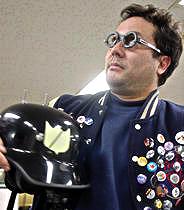 It’s the old and the new in Japan! What makes today’s young Japanese people “tick”? What are they interested in? What do they want to do?
Well, that my friends, is what I have been here to find out. It’s the $64 million dollar question. I’m still searching. I’ll let you know if and when I find out. Until then, that’s basically the deal with Japan up until now.


