


 How sad to hear the news that Harry Browne (born June 17, 1933), author and long-time spokesman for libertarian causes, died March 1, 2006. He was a man of great principle who courageously and consistently stood up for liberty even when his position clashed with mainstream political culture and public opinion. He was a great writer who worked hard to turn a phrase in a way that would serve to educate people about free markets and the free society. He was a supremely thoughtful man, who read voraciously to educate himself, was not averse to admitting error, and constantly struggled to say what was true as he understood it.
Harry goes way back in the history of modern libertarianism. His book How You Can Profit From the Coming Devaluation, which came out in 1970, was a blockbuster in its day. He foresaw what would result from Nixon’s abandonment of the gold standard. In contrast to legions of mainstream economists, he knew from his reading of the Austrian economists such as Murray Rothbard that an inflationary period was on the horizon and that gold prices would not go down but up. Those who followed his advice did well indeed.
But the book also had pedagogical merit. It introduced the community of readers that buy how-to books on investments to the Austrian School of economic thought. He explained the origin and nature of money, and how the gold standard had been destroyed by governments, not for good reasons, but to provide fuel for the growth of power. He explained how the business cycle results from monetary manipulation by the central bank, a theory that had been originated by Mises. He applied the theory to contemporary events.
Harry was a founder of what was called the “hard-money movement” — that group of writers and consultants who rallied around gold and silver as inflation hedges in hard times. But he differed from many people in this crowd because he was willing to change his advice depending on circumstances of time and place. In the 1980s, for example, he came to advocate a balanced portfolio of mutual funds alongside precious metals. His “permanent portfolio” made money during one of the great stock run-ups of American history.
During the 1990s, he worked tirelessly for libertarian causes. He had never been a big enthusiast for the Libertarian Party but in 1996, he graciously threw his hat into the ring as an aspirant to its presidential nomination.
He won the bid, and proceeded to dedicate himself to educating the American people about government and libertarian principles. His book Why Government Doesn’t Work is as good a campaign book as has appeared in the history of American elections. In 2000, he was an effective and dedicated candidate again. He didn’t need to make these runs, and he probably regretted it later at some level, but, at the time, he saw this as an opportunity for public service, a chance to do more good and reach more people.
How did his presidential bids do at the polls? About as well as most third-party candidates do in a two-party system. Many people who might have voted for him either stayed home or worried at the last minute that they would be throwing away their votes or helping a candidate whom they feared, by failing to vote for the lesser of two evils.
It is extremely difficult for any third-party candidate to overcome this problem. However: it was also during this period that many people in the two parties began to fear the Libertarian vote on grounds that, as small as it might be, it was enough to make a margin of difference in any race. The LP went from being dismissed to being feared, and this was Harry’s doing.
He was exceptional as a public speaker during the campaigns. No matter whether the topic was taxes, education, states rights, war and foreign policy, or the drug war, he took the right position and explained it in a way that allowed anyone to see his point of view. He changed minds, and stuck to principle the whole time. Harry was not tempted to sell out his message for the sake of more votes. He didn’t trim or compromise. His energies were spent trying to think of ways to make the core message more marketable and understandable.
Harry went through two ideological permutations that we can look back on with some degree of regret. His second book called How I Found Freedom in an Unfree World conflated libertine choices in personal lifestyle with ideologically driven libertarian political philosophy. This was regrettable insofar as it contributed to the public perception of libertarians as nothing more than people who want bourgeois income without bourgeois institutions and values.
In the early 1980s, he went in the opposite direction, sympathizing far too much with the Republican agenda and even temporarily showing sympathies for Reaganite foreign policy. In this he foreshadowed the sad descent of many current-day libertarians into the miasma of DC policy wonkery and political gamesmanship.
 To his credit, however, these were temporary diversions from a lifetime of solid writing and thinking. In his last years, few writers have been as good as Harry on all aspects of the Bush administration. After 9-11, when others fell silent or acquiesced to regime priorities, he stuck his neck out and defended personal liberty against the surveillance state, less government against the homeland-security state, and peace against the war on terror. He never hesitated. He wrote the truth with grace and good humor, and clicked “Send.”
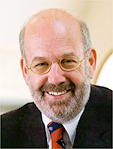 As we look back on the history of the libertarian movement, and we think of those who have contributed mightily to making the idea of radical liberty more mainstream and popular, Harry Browne emerges as a giant. He was talented, dignified, sincere, and dedicated, and he showed genuine courage in the face of fantastic pressure to get him to cave in. All lovers of liberty should be grateful for him, his life, his writings, and his legacy. We will all miss you terribly, Harry. May you find the freedom in the next life for which you fought so hard in this.


