


In my recent article on Lee Harvey Oswald and the CIA, I raised the possibility that Oswald was working deep undercover for the CIA when he defected to the Soviet Union and then returned to the United States as a communist sympathizer. There are a few other things about Oswald that have long mystified me.
When Oswald was living in New Orleans in the period prior to the assassination, he got into an altercation with an anti-Castro Cuban named Carlos Bringuier while Oswald was distributing pamphlets promoting The Fair Play for Cuba Committee, a pro-Cuba organization that the CIA considered to be subversive.
As a result of that altercation, Oswald was arrested for disorderly conduct and taken to the local jail in New Orleans. While he was incarcerated, he asked to talk to a FBI agent. Lo and behold, a FBI agent named John Quigley came to the jail and visited with Oswald for an hour and a half.
Now, I ask you: How many communist sympathizers have that much influence? Indeed, how many ordinary people do you know who, after being arrested for disorderly conduct by the local police, would be able to summon a FBI agent who would come and visit them in jail?
 Someone Would Have Tal...
Best Price: $9.63
Buy New $25.36
(as of 12:30 UTC - Details)
Someone Would Have Tal...
Best Price: $9.63
Buy New $25.36
(as of 12:30 UTC - Details)

That seems rather unusual to me. After all, the offense of disorderly conduct, especially at the local level, is as far from being a federal crime as one can get. Nonetheless, here is a FBI agent responding positively to a request by a supposed communist sympathizer jailed for the local crime of disorderly conduct and visiting with him for an hour and a half.
Another oddity is the Fair Play for Cuba pamphlets that Oswald was distributing. Some of the pamphlets had a return street address stamped on them — 544 Camp St. Yet, that was not the address of the Fair Play for Cuba Committee or even Oswald’s address. It was actually an address that housed the same building in which a 20-year veteran of the FBI was running his private detective agency — a man named Guy Banister.
 On the Trail of the JF...
Best Price: $3.16
Buy New $34.95
(as of 04:50 UTC - Details)
On the Trail of the JF...
Best Price: $3.16
Buy New $34.95
(as of 04:50 UTC - Details)
Perhaps just a coincidence, but a strange one at that. But the obvious question arises: What would happen if people responded favorably to the pamphlet by sending letters to that address? How would such letters ever get to the Fair Play for Cuba Committee or to Oswald? I wonder if Oswald thought about that when he was distributing the pamphlets. Wouldn’t you think that that would matter to him?
There is another interesting aspect of the altercation that resulted in Oswald’s arrest. Carlos Bringuier, the man with whom Oswald had the altercation, was associated with a fiercely anti-Castro Cuban group named the DRE. During the House Select Committee hearings on the JFK assassination in the 1970s, the CIA called a man out of retirement named George Joannides to serve as a liaison between the CIA and the House Committee. In the 1990s, after Joannides had died, documents revealed that he had served as a CIA conduit that was funneling money into the DRE during the time of Oswald’s altercation with Bringuier. Yet, that fact had never been revealed to the House Committee or anyone else, including the Warren Commission, and no one was ever able to question Joannides about it.
Since then, the CIA has steadfastly refused to open up and disclose its Joannides files to the public. Several years ago, a former Washington Post journalist named Jefferson Morley sued the CIA seeking disclosure of the Joannides files, a suit that is still pending and which the CIA continues to fiercely oppose even today, on national-security grounds. See my article, “Appoint a Special Prosecutor in the JFK-Joannides Matter.”
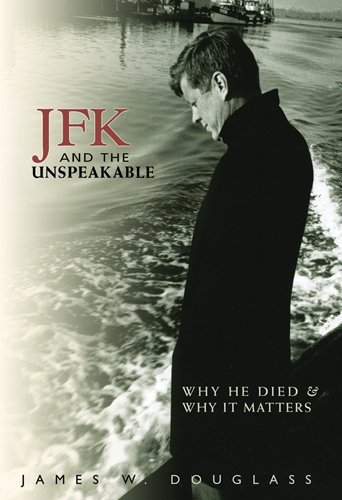 JFK and the Unspeakabl...
Best Price: $3.21
Buy New $2.26
(as of 03:25 UTC - Details)
JFK and the Unspeakabl...
Best Price: $3.21
Buy New $2.26
(as of 03:25 UTC - Details)
Another weird aspect of this case involved a note that Oswald delivered a couple of weeks prior to the assassination to a FBI agent in Dallas named James Hosty. Immediately after Oswald was assassinated, Hosty destroyed the note. Hosty later claimed that in the note Oswald threatened Hosty for harassing Oswald’s wife.
Of course, that’s possible. And it’s also possible that the reason Hosty destroyed the note was to protect the FBI from embarrassment over having received such a note two weeks before Kennedy was assassinated and not having reported it to the Secret Service.
 Brothers: The Hidden H...
Best Price: $2.53
Buy New $33.93
(as of 09:40 UTC - Details)
Brothers: The Hidden H...
Best Price: $2.53
Buy New $33.93
(as of 09:40 UTC - Details)
But how often does one see a FBI agent scrambling to destroy evidence in one of the most important murder cases in history? After all, two days after the assassination there was no way that Hosty could have been certain that Oswald wasn’t part of a conspiracy to kill the president, one that would later be prosecuted in court. Thus, Hosty had to know that despite Oswald’s death, Hosty was potentially engaging in obstruction of justice by destroying evidence that could later be pertinent in a conspiracy-to-murder case.
Finally, I think that one of the most fascinating aspects to Oswald’s post-arrest statements was his statement “I’m a patsy.” Ordinarily, when a person is denying guilt, his reaction is simply one that is limited to denying guilt, such as: “I didn’t do it. I’m innocent. They have the wrong guy.”
Oswald did more than that. He not only protested his innocence, he went a step further and suggested that someone or some people had set him up and were framing him. What would cause him to go off in that direction rather than simply claim that he was innocent of the crime?
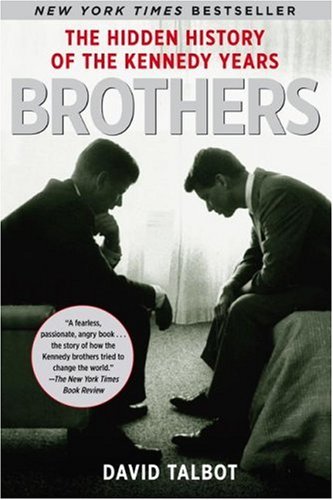
In his book Brothers, David Talbot writes, “Robert Kennedy had one other phone conversation on November 22 that sheds light on his thinking that afternoon. He spoke to Enrique ‘Harry’ Ruiz-Williams, a Bay of Pigs veteran who was his closest associate in the Cuban exile community. Kennedy stunned his friend by telling him point-blank, ‘One of your guys did it.’”
Some 45 years after the JFK assassination, one cannot help but wonder whether Robert Kennedy was right.

