


Recently by Gerald Celente: The 2nd American Revolution
The steady drumbeat of good news is getting infectious. The Dow Jones has rallied almost 40 percent from its bottom on March 9. The Federal Reserve expects the economy to pick up in the second half of this year. Home sales rose 11% in June and corporate profits strengthened in the second quarter. Pres. Barack Obama has signaled signs of “green shoots” on the economic landscape. Alan Blinder, the former vice chairman of the Federal Reserve Board, recently pronounced in an op-ed in the Wall Street Journal, “The Economy Has Hit Bottom.” The Aug. 3 cover story in Newsweek went even further, declaring boldly, “The Recession is Over.”
But before you get giddy, several economists caution that we may be witnessing a false lull before the storm, that the temporary economic boost is propelled by the nearly $1 trillion infusion of government bailout money to financial institutions and the economic stimulus package. They fear that we are on the verge of a double dip recession and that the second recession could be longer and deeper.
A handful of prominent investment and trend analysts and scholars are decidedly alarmist, even projecting a depression that will rival the Great Depression of 1929. Gerald Celente, founder of The Trends Research Institute, which the Los Angeles Times once described as the “Standard and Poors of Popular Culture,” forecasts “Food riots, tax protests, farmer rebellions, student revolts, squatter digins, homeless uprisings, tent cities, ghost malls, general strikes, bossnappings, kidnappings, industrial saboteurs, gang warfare, mob rule, terror” by 2012 in the latest edition of The Trends Journal.
Truth is, economic forecasting is a hazardous business even in less rockier times. Federal Reserve Chairman Ben Bernanke recently quipped at a public town hall, “Economic forecasting makes weather forecasting look like physics.” These days many economic indicators are defying both logic and historical patterns. It is the reason why, despite many reassuring economic signals in recent weeks, national anxiety remains palpable.
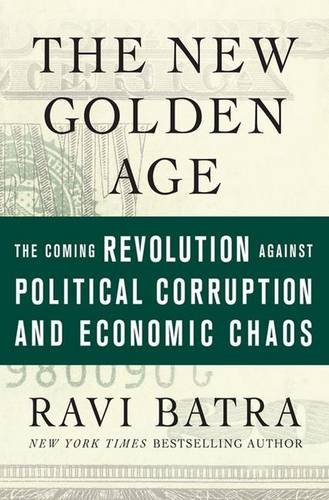
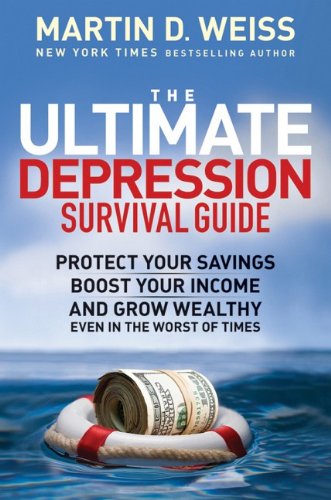
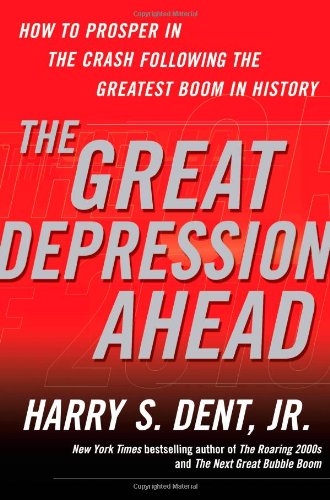
To gauge the view from the other side, Little India turned to Celente and three other prominent advocates of the counter intuitive perspective: investor advocate Martin Weiss, author of New York Times bestseller, The Ultimate Depression Survival Guide; economic forecaster Harry S. Dent, author of another New York Times bestseller The Great Depression Ahead; and Southern Methodist University economist Ravi Batra, author of The New Golden Age: The Coming Revolution Against Political Corruption and Economic Chaos.
Still Got Two Eyes
 The New Golden Age: Th...
Best Price: $2.67
Buy New $6.99
(as of 02:00 UTC - Details)
The New Golden Age: Th...
Best Price: $2.67
Buy New $6.99
(as of 02:00 UTC - Details)

Trends analyst Gerald Celente, founder of The Trends Research Institute and publisher of The Trends Journal, built his reputation by accurately predicting the 1987 stock market crash, the 1997 Asian economic crisis and the “Panic of ’08.” He has attracted both attention and ire in recent months with his increasingly dire projections, which he titled as “Obamageddon.”
In the latest The Trends Journal you make very dire predictions of tent cities, food riots and tax rebellion by 2012. Do you still envisage conditions will be as bad as you were projecting?
Economists now predicting recovery are the same people that were saying recession wasn’t here even when we were in recession. Go back to the campaign in 2008, they didn’t start talking about the recession until the Fall of 2008 even though the recession began in December 2007.
These are the same people talking about green shoots a couple of months ago and as you go back to the beginning of the year, they said we would be in recovery by second quarter of 2009. The Obama administration, which began with a stimulus package, had estimated that without the stimulus package, unemployment in 2009 would be at 8%. We had a stimulus package and unemployment is at 9.5%. They had also said that they would create by mid-year 600,000 jobs and we lost 2.5 million. At best, at best, they saved 150,000. All their forecasts are wrong. There is nothing they have forecast economically that has come to pass.
But the improving signs of bank profits and new financial earnings reports, don’t give you hope?
Let’s look at the bank reports. We know that hundreds of billions of dollars of taxpayer money has been given to the banks and they refuse (this is like fiction), to tell the people (the taxpayer) who gave them money, where the money went, how they are spending it.
 The Ultimate Depressio...
Best Price: $0.10
Buy New $3.95
(as of 04:55 UTC - Details)
The Ultimate Depressio...
Best Price: $0.10
Buy New $3.95
(as of 04:55 UTC - Details)
If you gave me, as they gave Goldman Sachs, $13 billion to cover losses with AIG — 100% coverage of losses — converting Goldman Sachs from a brokerage firm to a bank holding company, giving them access to $10 billion, plus all the loans and benefits they are giving them at discount prices, could you show a profit? These are profits that are pumped up by bailouts, rescue packages and stimulus plans. Yesterday the market went up because Caterpillar showed better earnings than they had thought, or rather losses less severe. They are not better off; their profits are off 66%. Who in the real world wouldn’t call that depression level results? I would consider that atrocious. What you didn’t have a 77% decline? Oh, you only lost one arm and a leg, but you still got your two eyes and the use of one leg!
You have said this bailout bubble can be more lethal than the earlier bubbles. Can you explain?
In The Trends Journal in 2004 we predicted the great recession. We noticed it would happen. It was very easy to see that after the dot com crash in March 2000, rather than letting Wall Street take its $5 trillion worth of speculative losses that were built up by the dot com boom, the Federal Reserve began to lower the interest rates to 46-year lows. They created this borrow-and-spend mentality that was unprecedented in American history.
You want to buy a new house, borrow on your old one; with your new equity loan, you can build that new addition, go on a vacation, buy a new car, send your kids to school, go on a shopping spree. Your house is a piggy bank.
So housing as an asset became artificially inflated by the availability of historically cheap money rather than letting the bubble burst. With the bailout bubble, they have added $13 trillion worth of phantom money. This isn’t real money, it is phantom money printed out of thin air, based on nothing, backed by nothing. So they are creating a bubble, but when this financial/real estate bubble bursts, it is worse than the dot com bubble, because now government has an equity position in these companies, and they have government executive powers and management controls. This is unheard of in American history. This used to be the entrepreneurial empire of the world, that so much of the world respected and revered as the capital of entrepreneurism. No more.
You developed a fair amount of credibility in the media with your previously accurate predictions. But some of the things you are saying sound shrill. Do you really believe it will be as extreme as you are saying or are you trying to pierce through the clutter of the positive blather?
Not at all. We take what they are saying to be extreme. How could people believe these people when everything they said is wrong. If you can show me they are right here, I’ll say fine, we’re only humans, we all make mistakes. But we can say with all certainty, and we say it over and over again, you cannot print phantom money out of thin air based on nothing, backed by nothing without destroying the economy. Look at Brazil, India, China, Russia, the BRIC countries, they all talk now about another reserve currency.
But when you say food riots, tent cities and tax rebellions?
Tax rebellions, let’s take that. Go back to 2007, we wrote about tax revolts when George Bush was president. We saw this coming. Current events inform future trends. They are squeezing the people at every level. Look at what is happening in California. Tax rebellion is already happening. They are trying to downplay them when tea parties and tax protests happen. This hasn’t happened in America before in my lifetime. And now they are commonplace. They happened in April and again on the 4th of July. This is just the beginning. Food riots, oh yes. When people get hungry, when they have nothing to eat, you are going to see a lot of ugly scenes happen in America.
What would you project the unemployment rate to be at end of 2009 and end of 2010?
It will probably be heading towards 11% by end 2009 and by 2010 it could well be into 12—13%.
Where would you project the Dow Jones?
We don’t know. The Dow Jones is a different game. It can go in any kind of direction. When you go to the Great Depression, you saw the Dow Jones improving. It is not an economic indicator, it is a casino.
When do you expect housing prices to bottom out?
It could be many years. It could be a decade. There are two buying seasons in America, Spring and Fall, period, paragraph. Spring buying season was a bust and Fall does not look any better. It is very dismal for the future.
 The Great Depression A...
Best Price: $0.25
Buy New $4.75
(as of 02:15 UTC - Details)
The Great Depression A...
Best Price: $0.25
Buy New $4.75
(as of 02:15 UTC - Details)
Do you think our money is safe in U.S. banks?
We don’t give investment advice. I tell you what I do. I am a big believer in gold and I think Indians like gold. I hedge my money. In my business I need cash, so I spread it between euros and dollars, knowing that if euros go up, dollars go down, so I have parity. That is the investment strategy for right now, it is not to take risk, it’s wealth preservation….
We are looking at mid-August for some dire economic news. In the event there is dire economic news, there are more financial collapses, there is a probability that they may call a bank holiday. It is not unprecedented, it has been done in America before, Pres. Franklin Roosevelt did it .… So are banks safe? It is not a question, are banks safe; it is a question, will they call a bank holiday, which they have done before? If they do, you will be restricted on how much money you can get out. They have done it in Argentina and other countries. Yes, you can get your money out, it’s FDIC insured. You just can’t get it out all at once and it may be devalued.
What do you do with your investments and retirement accounts?
I don’t have any. My investments are in the property and real estate I own. My retirement is all in gold.
What can people do to minimize their employment and other financial risks?
This whole mentality, this American mantra to shop until you drop, what kind of sick thinking is that? The businesses that we believe are going to make it in this new climate are going to be ones that accentuate quality — less is more. In our study, the very best company that we see are the ones whose profits are down between 25—30%, that’s the best. The worst are down 70% .…
The other thing to consider is, why are you sending your child to college for an MBA, or a degree in communications, journalism, art, history? As an economist what is going to be the return on the investment? The college industrial complex is going to be one of the major economic collapses in the United States. They are producing students, retraining people for jobs that don’t exist. So unless you are in specialty fields in high-tech, health, engineering, alternative fuels, or smart areas that have more productive usage of resources, outside of those fields, the soft arts are going to be losers.
This country was built not on a mantra of shop until you drop. It was called Yankee frugality: use it up, wear it out, make it do, do without. Those are the kinds of things that need to be considered again.
At this stage what do you think are the greatest risks to the U.S. and the global economy?
The greatest risk on the economic end is the collapse of the U.S. dollar. That is the greatest risk that we see, because America has the ability to destroy the global financial system with these unprecedented bailouts, stimulus and rescue packages. Whoever heard of this before? They are jeopardizing the global economy. It is not saving it, it is jeopardizing it.
 Trends 2000
Best Price: $1.79
Buy New $10.90
(as of 03:15 UTC - Details)
Trends 2000
Best Price: $1.79
Buy New $10.90
(as of 03:15 UTC - Details)
Are there other disruptive forces as well?
We are only looking at economic issues. Back in 2001, President Bush’s popularity rating was as low as President Obama’s is now. It was declining rapidly. I even remember word for word, because I was writing about it, what the American media were talking about. There was this Congressman Gary Condit and his aide, a young girl Chandra Levy, who was missing, and shark attacks. That was the news, that is all they were talking about in the summer of 2001 and Bush was off on vacation in Crawford, Tex., for months as America was still suffering from the fallout of the dotcom bubble burst.
Then all of a sudden on Sept. 11 the whole game changed. The war on terror began and Bush’s popularity skyrocketed. The same thing can happen here. Any wild card could happen and change the game at a minute’s notice and deflect people’s attention away from an economic policy failure, an economic policy that is doomed to fail.
Do you envisage that as conditions worsen, immigrants could face a backlash?
I don’t care what country it is, immigration is going to be a major issue because there is not going to be enough wealth to go around under the current system.
Do you know that the anti-marijuana laws in America grew mostly out of the Great Depression and they blamed the Mexican immigrants for all the heinous crime. They trumped up the problem and blamed it on the immigrants. They made it an immigrant issue, which had absolutely no foundation at all, either the danger of smoking marijuana or the problem being caused by the Mexicans. But they blamed it on the Mexican immigrants and it was used as a pretext to have very severe anti-immigrant laws in place and they were of course also blaming them for undercutting the economy. So these trends are old. It’s just a new time and a new phase.
Do you think either political party could have made a difference?
No, it is like watching the World Wrestling Federation. They pretend to be arch-enemies on the stage. After the cameras go off, they do their deals together. There is very little difference between the two parties.
This is reprinted from Little India.
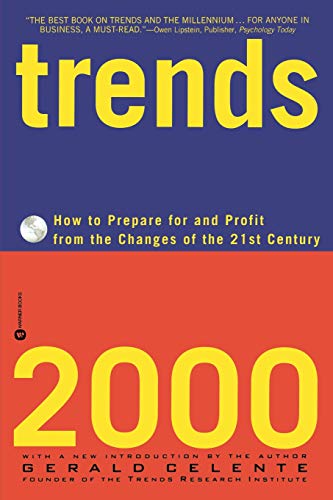
Gerald Celente is founder and director of The Trends Research Institute, author of Trends 2000 and Trend Tracking (Warner Books), and publisher of The Trends Journal. He has been forecasting trends since 1980, and recently called “The Collapse of ’09.”

