


The Bush administration is subverting the Freedom of Information Act (FOIA). On January 31, the People for the American Way publicly protested that the Justice Department claimed it would cost the group a minimum of $372,999 for the feds to search their files (in response to an FOIA request from the group) for cases in which the Justice Department requested secret proceedings in court involving immigrants arrested and held after 9/11.
This is typical of the how the Bush administration is using bureaucratic maneuvers to subvert the right of citizens to know what their government is up to.
In a January 2004 speech to the rich and influential gathered for a conference in Davos, Switzerland, Attorney General John Ashcroft lectured the world:
Information is the most therapeutic resource we have in achieving integrity in our markets and in our government. When evidence of corruption is presented to the public, institutions are held accountable. In this way, open government becomes an essential tool to creating good government.
Unfortunately, Ashcroft did not permit his high opinion of the benefits of open government to deter him from carrying out policies that made the U.S. government more secretive.
In 1974, as evidence of a torrent of Nixonian lies accumulated, Congress passed a sweeping expansion of the Freedom of Information Act, originally enacted in 1966. Donald Rumsfeld (President Ford’s chief of staff) and Dick Cheney (Rumsfeld’s deputy) urged Ford to veto the act as “unworkable and unconstitutional.” Ford followed Cheney’s advice, but Congress promptly overrode Ford’s veto.
FOIA proved invaluable in disclosing government abuses across the board, and millions of citizens have used the act to track down their personal records from the FBI, the Veterans Administration, and other federal agencies. In 1993, Bill Clinton’s attorney general, Janet Reno, notified federal agencies to interpret the act in a way to ensure that the government “is not unduly limiting the records found responsive to those requests” and to fulfill requests unless it was “reasonably foreseeable that disclosure would be harmful.” Some federal agencies followed Reno’s dictum and provided fuller responses to citizens and media seeking government records.
Despite Reno’s memo, FOIA continued to be one of the most frequently violated laws in Washington. FOIA requires federal agencies to respond to requests within 20 business days. However, many agencies have been notorious for taking years to respond to FOIA requests, if at all. As of 2001, the attorney general’s average delay for responding to an FOIA request was 137 days, and the FBI took more than 500 days to process complex FOIA requests. The Energy Department averaged more than five years to respond to FOIA requests. Upon taking power, Ashcroft surveyed the situation and realized the problem was that some federal agencies continued to brazenly obey FOIA. One month after 9/11, he issued guidance to all federal FOIA officers.
Words versus actions
Ashcroft curtsied to “full compliance” with FOIA and then quickly reminded FOIA officers that the Justice Department
and this Administration are equally committed to protecting other fundamental values that are held by our society. Among them are safeguarding our national security, enhancing the effectiveness of our law enforcement agencies, protecting sensitive business information and, not least, preserving personal privacy.
Ashcroft implied that these values somehow conflict with FOIA. Yet FOIA already has specific exemptions to prevent disclosure of documents in most of the categories he mentioned.
Ashcroft continued:
I encourage your agency to carefully consider the protection of all such values and interests when making disclosure determinations under the FOIA. Any discretionary decision by your agency to disclose information protected under the FOIA should be made only after full and deliberate consideration of the institutional, commercial, and personal privacy interests that could be implicated by disclosure of the information…. When you carefully consider FOIA requests and decide to withhold records, in whole or in part, you can be assured that the Department of Justice will defend your decisions unless they lack a sound legal basis or present an unwarranted risk of adverse impact on the ability of other agencies to protect other important records. (Italics added.)
Ashcroft effectively encouraged agencies to deny FOIA requests. He sounded as if he believed that Congress had made a technical error in drafting the original legislation, inadvertently neglecting to title it “The Freedom from Information Act.” He sought to create a presumption of nondisclosure, backed up by the deep pockets of the world’s largest law firm. The feds know that few FOIA requesters have the means for lengthy legal battles with a federal agency to get the documents they seek.
Stonewalls and backlogs
The General Accounting Office reported a year later that “agency backlogs of pending [FOIA] requests are substantial and growing government-wide.” Most agencies surveyed had an average of ten weeks’ backlog of unfulfilled FOIA requests. Steven Aftergood, director of the Project on Government Secrecy at the Federation of American Scientists, said, “The greater the backlog, the longer the delay, the less useful the law is in fulfilling its function.”
Ashcroft’s FOIA hostility helped spur denials on almost all requests by the ACLU and other organizations and individuals on how the Justice Department is using the new powers provided by the USA PATRIOT Act. The Defense Department also stonewalled FOIA requests on the workings of its Total Information Awareness surveillance scheme.
The most important FOIA denials involved the Bush administration’s claim of secrecy with respect to the names of the 1,200 Arabs, Muslims, and others who were arrested as “suspected terrorists” in the wake of the 9/11 attacks. The Justice Department insisted on closed court hearings for all of the arrests and on closed immigration hearings for all the subsequent deportations. Even though not one of those arrested turned out to have any connection to the 9/11 attacks, the Bush administration continued to claim that disclosure of any of the names could provide a “mosaic” that could fatally aid terrorist plotters. Federal appellate judge Damon Keith ruled against the Bush policy in 2003:
Democracies die behind closed doors…. A government operating in the shadow of secrecy stands in complete opposition to the society envisioned by the Framers of our Constitution. When government begins closing doors, it selectively controls information rightfully belonging to the people. Selective information is misinformation.
Federal judge Gladys Kessler also trounced the Bush policy:
Secret arrests are a concept odious to a democratic society…. The public’s interest in learning the identity of those arrested and detained is essential to verifying whether the government is operating within the bounds of law.
Lower federal courts split on the issue, and the case landed at the Supreme Court. The issue was whether the government’s unsubstantiated assertion that someone was suspected of a heinous crime can justify keeping secret in perpetuity all details of the case, regardless of a defendant’s innocence of serious offenses. The Justice Department never explained how revealing the names of hundreds of non-terrorists arrested after 9/11 would aid terrorist groups.
The Supreme Court refused to hear the challenge. The Washington Post termed the Supreme Court’s refusal to consider the secrecy of the 9/11 roundup as “a significant victory for the Bush administration.” Ashcroft said he was “pleased the Court let stand a decision that clearly outlined the danger of giving terrorists a virtual road map to our investigation that could have allowed them to chart a potentially deadly detour around our efforts.” But it was a “road map” that would have shown little more than the number of federal wild goose chases. Kate Martin of the Center for National Security Studies commented, “We have a situation where the government arrested more than a thousand people in secret, and the courts have let them get away with it. There is no accountability for the abuses, and secrecy allowed the abuses.”
Thanks to the Supreme Court’s tacit approval, the federal government may merely need to repeat the “national security” mantra if it carries out another round of mass secret arrests.
Government officials often cite the cost of compliance with FOIA requests as a reason for violating the statutory deadlines. The Justice Department estimated that responding to FOIA requests cost federal agencies $300 million in 2002. Fees paid by people requesting information covered part of this cost. In contrast, the federal government spends almost $5 billion a year classifying documents to prevent their disclosure. The federal government spends almost 15 times as much locking information away as it does responding to requests for information.
Federal FOIA officers violate the law on a regular basis. Yet the Justice Department has never sought criminal sanctions against federal employees who violate Americans’ right to know how the government is using its power over them.
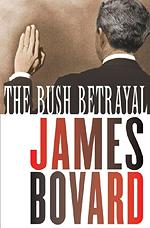 In 1798, James Madison, the father of the Constitution, in a resolution attacking the Alien and Sedition Acts, championed “the right of freely examining public characters and measures, and of free communication among the people thereon, which has ever been justly deemed, the only effectual guardian of every other right.” Bush administration policies, by making it more difficult to learn of government’s actions, place the rights of the American people in danger.

