


For whatever reason, the French newspaper, Liberation, chose to recall a grim event last week. On February 4, 1912 Franz Reichelt, also known as the ‘flying tailor,’ put on his contraption — a homemade outfit designed to work like a parachute — went up to the first observation level of the Eiffel Tower, hesitated…then stepped over the rail and jumped.
Alas, he did not fly. Nor even float. He fell "like a stone," the paper reported.
Immortality was achieved, but not the way he had hoped. His stunt was captured by the new motion picture technology of the time. That silent film inspired the very popular Jackass videos, which show people engaged in reckless acts of mischief and mortality.
But we do not have to go to YouTube to enjoy the Jackass genre. We have only to read the news. All over the world the authorities are strapping on their absurd parachutes…and climbing to very high places. In Europe, banks borrowed 442 billion euros last month from the European Central Bank. Much of it is lent back to European governments. In America, stimulus funds are used to fix public toilets, as well as to repair Wall Street’s balance sheets. Trillions of dollars have been put at risk in these adventures — $23 trillion in the United States alone. And yet, despite the most daring experiment in stimulus ever, by the end of June, the British economy was 5.6% smaller than it had been a year before, paralleling the decline that followed the crash of ’29. As for the United States…we await the figures…
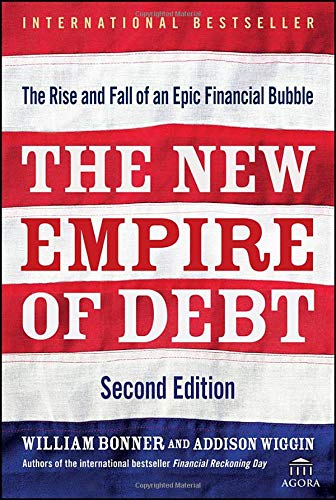 The New Empire of Debt...
Best Price: $1.03
Buy New $3.00
(as of 04:30 UTC - Details)
The New Empire of Debt...
Best Price: $1.03
Buy New $3.00
(as of 04:30 UTC - Details)

On the evidence, stimulus programs aren’t working. In fact, where they are tried the most they work the least. For proof, we go to Stimulation Nation itself. From America last week came news that new house sales had finally turned up. They were up 11% in June, according to the papers. That was the monthly figure. According to the annual numbers, they were down 21% from the year before — at the second lowest since they began counting in 1963. And since the population is much bigger than it was 52 years ago, this was relatively the worst June in history for new house sales. And now that the economy is in a slump, the rate of new household formation has been cut in half. Faced with lower incomes and worsening jobs prospects, people are less eager to set up new households — reducing the demand for new houses.
Unemployment shows no sign of improving, either. The stimulus program was supposed to cap joblessness at 8%. Officially, the rate is now 9.5%. Economist David Rosenberg puts the real unemployment rate almost twice that high. And businesses are cutting jobs even faster than expected. But firms are not only laying off redundant workers; they are laying off workers who would normally be spared. What’s more, those who are left are working the shortest weeks ever recorded.
In the past, workers were quick to move to where the jobs were. The Sun Belt traditionally bounced back first. But Florida, California, Arizona and Nevada have been flattened even more than the rest of the nation — by record foreclosures, government cutbacks and bankruptcies. Now, the jobless stay put…and stay unemployed.
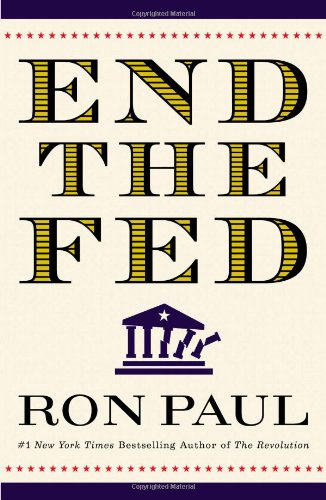 End the Fed
Best Price: $1.12
Buy New $8.53
(as of 10:10 UTC - Details)
End the Fed
Best Price: $1.12
Buy New $8.53
(as of 10:10 UTC - Details)
Currently, the excess capacity in the United States is staggering — both in labor and capital. Capacity utilization is only 65%; in theory, output can increase 35% before any new capital investments are made.
Recovery? "Forget it," says Rosenberg.
Now that the facts are out of the way, we end our critique of stimulus…and turn to laugh at the stimulators. "Madmen in authority, who hear voices in the air, are distilling their frenzy from some academic scribbler of a few years back," wrote John Maynard Keynes. And now it is Keynes’ voice they hear.
"We are all Keynesians now," said Richard Nixon as he strapped on a crash helmet.
Keynes probably got the idea of a counter-cyclical stimulus in Bible class. And a good idea it was. Simple…intuitively correct…practically demonstrated…and theoretically sound. But he and his followers still managed to screw it up.
First, Keynes’ General Theory is no theory at all…at least not in the scientific sense. It can’t be tested. The results aren’t reproducible. Instead, it’s merely an idea about how things should work, based on an Old Testament story.
Pharaoh had a dream. He dreamt he saw seven fat cows devoured by seven scrawny, misbegotten cows. He didn’t know what the dream meant, so he called for a young Hebrew man who had interpreted dreams for his master. Joseph told Pharaoh that Egypt was to enjoy seven years of abundance followed by seven years of famine. He told him what he should do about it too. He should store all the grain he could from the fat years…so he could pass it out when the going got tough.
 This is a story we all know. It is easy to tell and easy to understand. But modern economists twisted it as though it were an inflation statistic. They maintain that when the business cycle turns down, it’s just like a drought. And they can counteract the effect of the drought by giving the economy stimulus — liquidity — from the public sector.
Trouble is, they missed the point completely. Do you recall any public official urging the public to stop spending so much in the bubble years? Do you remember any Treasury Secretary or Fed Chairman suggesting that the U.S. government run real budget surpluses in the fat years? Does any headline from any paper in the nation mention a storeroom in which grain or treasure was stored for the lean years? Not at all! Instead, the feds encouraged people to eat their grain! Governments ran deficits even during the bubble years, with the biggest deficit in history in 2008, just as the lean years began. Now they have no real grain to offer. So they turn to a reckless, disaster-defying stunt — passing out phony money, like sawdust muffins…
Future generations will watch the video and laugh until their stomachs hurt.
Bill Bonner [send him mail] is the author, with Addison Wiggin, of Financial Reckoning Day: Surviving the Soft Depression of The 21st Century and Empire of Debt: The Rise Of An Epic Financial Crisis and the co-author with Lila Rajiva of Mobs, Messiahs and Markets (Wiley, 2007).

