


Each generation needs to learn the mistakes of their forefathers for themselves. Though happy to turn on an electric light invented by a dead man, the living — in love, war, and finance — believe nothing they haven’t seen with their own eyes, except when they want to.
“Avoid foreign entanglements,” cautioned the father of the country.
But corpses have no voice and no vote, neither in markets nor in politics. George W. Bush is undoubtedly better informed than George Washington. He may not have the wisdom of a Washington nor the brain, but at least he has a pulse.
Few people complain about this tyranny of the living. Most accept it as a fact of life. They would not want people to be excluded from the pleasures of life because of an accident of birth. But they are perfectly happy to have the oldest and wisest of our citizens systematically barred from the polling stations and the trading floors by the accident of death. The departed shut up forever, leaving behind them their car keys, their stocks, and their voter registrations — that is all there is to it. Goodbye and good riddance. It is as if they had learned nothing useful, noticed nothing, and had no ideas that might be worth preserving; as if each generation were smarter than the one that preceded it and every son’s thoughts improved on those of his father.
Oh, progress! Thou art forever making things better, aren’t thou? Throw out the sacred books — what are they, but the thoughts of dead imbeciles? Forget the old rules, old wives’ tales, old traditions and habits of old generations, old-timers’ superstitions, the old fuddy-duddies’ doubts! We are the cleverest humans who have ever lived, right?
Maybe. But if we could convene a council from the spirit world and invite the dead to have their say, what would the corpses tell us? Veni et vidi. Gaze on the dead, and learn their secrets. No one seems to care about dead people. No stockbrokers ask for their business. No politicians pander for their votes. No one cares what they think or what they may have learned before they shucked their mortal shell.
They get no respect, just a quick send-off, and then they are on their own. What did the old-timers know of war? Of politics? Of love? Of money? If only we could ask!
Years ago, investors wanted more from a stock than just the hope that someone might come along who was willing to pay more for it. They wanted a stock that paid a dividend out of earnings. When heard about a stock, they asked: “How much does it pay?” That was what investing was all about.
But by the 1990s, the old-timers on Wall Street had almost all died off. Stock buyers no longer cared how much the company earned or how large a dividend it paid. All they cared about was that some greater fool would come along and take the stock off their hands at a higher price. And the fools rushed in. And now the market is full of greater and greater fools who think the stock market is there to make them rich. What would the old-timers think of them?
And what would our dead ancestors think of our mortgages? Most of them had small mortgages, if any at all, on their homes. And if they had them, they couldn’t wait to get rid of them. (Even our own parents held little parties to celebrate finally paying off the mortgage on the family home.) What would our forebears think if they were to learn that the richest generation in American history has mortgaged a greater share of its homes than any in history? What would they think of no-money-down mortgages, minimum payment plans, and negative amortization schedules?
And what would the old-timers think of our government debt? The unpaid liabilities and obligations, expressed as though they had to be paid today, come to about $44 trillion, depending on the source you choose to believe.
And what do the generations of Republicans, now in their graves, who believed so strongly in balanced budgets for so many years, think of the republicano in the White House, who has proposed the most unbalanced budgets in history?
And what about the millions of dead Americans who immigrated to the United States to find freedom; what do they think of the country now? They came believing that if they minded their own business, they would be left alone to do what they wanted. But now, every pettifogging Pecksniff with a government service (GS) rating is on their grandchildren’s case.
And what about those millions of dead people who scrimped and saved — who got by on almost nothing — so their children and grandchildren might live free, prosperous, and independent lives? What would they think of their descendants, so deep in debt and so dependent on Asian lenders that they can barely pass a Chinese restaurant without bending over and kissing the pavement?
Each generation seems to think they are the first to stand upright, that their mothers and fathers walked on four legs and howled at the moon! Even when the living feign admiration for same fallen forebear, it is usually without paying of the least attention to what the poor schmuck actually said or knew. The dead leave us their memoirs, their gospels, their histories, and their constitutions — for what is a constitution but a pact with the dead? — and we ignore them. We seem to believe that all that they suffered, all they went through, all the mistakes they made, hold no more interest for us than a comment by a sunstruck contestant in a TV survival show: “This is . . . like . . . weird . . .”
A dead man, Edmund Randolph of Virginia, attended the Constitutional Convention in Philadelphia in 1789. He explained why America needed a constitution: “The general object was to produce a cure for the evils under which the United States labored; that in tracing these evils to their origins, every man had found it in the turbulence and follies of democracy.”
Another dead man, James Madison, made it even clearer: “Democracies,” he wrote, “have ever been spectacles of turbulence and contention; have ever been found incompatible with personal security or the rights of property; and have in general been as short in their lives as they have been violent in their death.”
So, we leave you “a Republic, if you can keep it,” added Ben Franklin.
Well, we couldn’t keep it. Now, we have a curious empire, with a constitution as flexible as its money. Everybody gets a vote in this new democratic Valhalla. Every halfwit’s ballot is worth as much as George W. Bush’s. Every fool and miscreant gets to have an opinion. Only the dead, are left out. Excluded. Ignored. Forgotten.
 It is as if only the living had opinions worth hearing, as if only the here and now counted for anything; as if the small, arrogant oligarchy of those who happen to be walking around had all the answers; as if the present generation had found the ultimate truth and reached the end of history.
Your authors have never killed anyone, but we read the obituaries with approval and interest. We look for the distilled wisdom of saint and sinner alike. (The editorial pages, by contrast, we read only for entertainment.)
 The trouble with the news is that it is impossible to know what is important when you must rely solely on the judgment of people who happen to be breathing. The living can imagine no problems more urgent than the ones they confront right now, and no opportunities greater than the ones right in front of them. We prefer the obituaries.
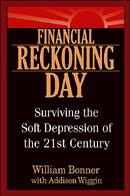
Bill Bonner [send him mail] is the author, with Addison Wiggin, of Financial Reckoning Day: Surviving the Soft Depression of The 21st Century and Empire of Debt: The Rise Of An Epic Financial Crisis.

