


Ted Kennedy is at it again. The 40th anniversary of Chappaquiddick, an event that proved beyond a doubt that the Kennedy family was above the law, has not brought an ounce of shame to the Great Statist Windbag. No, the self-proclaimed "Liberal Lion" of the Senate tells us that imposing a state-run healthcare system upon the rest of us is the "Cause of My Life."
Indeed, Kennedy was able to proclaim his "cause" on the pages of Newsweek, the magazine that once promoted rogue prosecutor Michael Nifong and his bogus Duke Lacrosse Non-Rape Case. We find that ever since Kennedy survived a plane crash in 1964, he has wanted "universal medical care" for the United States. (I notice that he did not use Chappaquiddick as a prop for his desire for state-controlled medical care, but then, Mary Jo Kopechne already was dead when rescuers found her.)
Kennedy points out that he never has had to worry about being able to afford medical care, and he believes that others should have access to the same care that he has:
Last year, I was diagnosed with a malignant brain tumor. Surgeons at Duke University Medical Center removed part of the tumor, and I had proton-beam radiation at Massachusetts General Hospital. I’ve undergone many rounds of chemotherapy and continue to receive treatment. Again, I have enjoyed the best medical care money (and a good insurance policy) can buy.
But quality care shouldn’t depend on your financial resources, or the type of job you have, or the medical condition you face. Every American should be able to get the same treatment that U.S. senators are entitled to.
This is the cause of my life. It is a key reason that I defied my illness last summer to speak at the Democratic convention in Denver — to support Barack Obama, but also to make sure, as I said, “that we will break the old gridlock and guarantee that every American…will have decent, quality health care as a fundamental right and not just a privilege.” For four decades I have carried this cause — from the floor of the United States Senate to every part of this country. It has never been merely a question of policy; it goes to the heart of my belief in a just society. Now the issue has more meaning for me — and more urgency — than ever before. But it’s always been deeply personal, because the importance of health care has been a recurrent lesson throughout most of my 77 years.
However, Ted Kennedy may be a lot of things, but stupid is not one of them. He knows that a state-run system that he is promoting will not provide the same quality of medical care to everyone, unless socialism magically does away with the Law of Scarcity. Indeed, a state-run system will mean that politically-connected people will be first in line, while others will have to wait. That is the way it always has been in socialist medical care, and that is what will continue to be the situation.
The Dangers of Sociali...
Best Price: $4.58
Buy New $4.80
(as of 12:05 UTC - Details)

Like Kennedy, I can say that this business is personal, and I will give a couple anecdotes, one regarding my niece and one about myself. My niece is seven years old and is profoundly handicapped because of a missed diagnosis at birth that led to cerebral palsy. Although she has an IQ of around 160, she cannot communicate with people through normal speech or gestures, and she is helpless to do anything on her own.
This week, she is scheduled for experimental brain surgery in which she will be the first person ever to receive this kind of operation. All of us have great hope that it will permit a connection of the "good" parts of her brain and will give her the ability to do things like speak when she wants to, feed herself, or even walk. We don’t know what will happen, however, until it happens; that is why they call it "experimental" surgery.
One would think that such a situation would make her a poster child for Kennedy’s vision of socialist care. The operation is hugely expensive, and many of the principals are doing this job pro bono. Much of the cost is being borne by state Medicaid funds, but it was touch-and-go for a long time as to whether or not the state would be willing to pay anything. Obviously, the private insurance that her parents carry would not be set up to deal with such experimental activity.
As I shall point out, however, this is not a case for KennedyCare, but rather a case against it. But before I do that, I will share a personal experience that happened five years ago this month.
By late spring and early summer of 2004, I was experiencing chest pains. Because of my background as a collegiate runner and my continuing exercise activity, I had come to believe I was impervious to heart disease. It turned out I was not, and I was in the hospital waiting to be examined for something I never believed could happen to me.
 Liberty Versus the Tyr...
Best Price: $5.00
Buy New $1.99
(as of 02:30 UTC - Details)
Liberty Versus the Tyr...
Best Price: $5.00
Buy New $1.99
(as of 02:30 UTC - Details)
The test early Monday, July 12, found three blocked arteries and my cardiologist immediately implanted stents, which still are working well five years later. I had a health plan that paid for all of it, and I am sure that had someone not been insured or had an inferior plan, that it would have been difficult for that person to receive the same care I received.
However, to use both situations I have described as reasons for KennedyCare is to misunderstand the very aspects of socialism and socialist care. Now, in his article, Kennedy declares that his plan is not socialism; that is a red herring. Any program in which the federal government not only provides the "funding" but also regulates the "costs" is going to be socialist.
Government will set prices, the level of care, and everything else in between, so to say that it will not be "socialist" is to be deceptive, and Kennedy has made a career out of being deceitful. While the political classes and their medial allies constantly decry the "injustice" of having "private insurers" make medical decisions, this plan will take the decision-making power from the insurers and place it in the hands of the risk-averse federal bureaucracy.
Furthermore, if anyone thinks that this "plan" will reduce the paperwork that doctors will have to perform, think again. I never have seen a bureaucracy yet that did not demand form after form; we will see more raids by armed "lawmen" on doctors’ offices as an increasing number of doctors and other medical professionals will be charged with "fraud" in their billing. It is bad now; just wait until the full socialism kicks in.
While I am sure that Kennedy would have included my niece had he known about her, in reality, she would have less of a chance for this experimental surgery under KennedyCare than she does now. That is because bureaucrats hate to take risks, and this surgery is risky; furthermore, there is no guarantee that it will be successful or result in any meaningful change at all.
Bureaucrats not only tend to be naturally risk-averse, but the very incentive systems for the bureaucracies guarantee that kind of behavior. If a bureaucrat is correct in deciding to take a big risk, the rewards for that person are minimal; however, if the person is wrong and the risk blows up, then the punishment is severe, and one’s career is ruined. A success rarely enhances a bureaucrat’s career, but a single, high-profile mistake will destroy it.
There also is this problem of coercion, and Kennedy admits it:
All Americans should be required to have insurance. For those who can’t afford the premiums, we can provide subsidies. We’ll make it illegal to deny coverage due to preexisting conditions. We’ll also prohibit the practice of charging women higher premiums than men, and the elderly far higher premiums than anyone else.
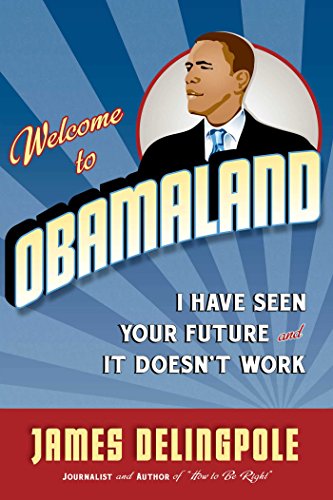 Welcome to Obamaland: ...
Best Price: $0.10
Buy New $1.43
(as of 05:25 UTC - Details)
In other words, you will have insurance, and you will pay for it, period. You will not have a choice in the matter, something the ancients once called coercion. (Kennedy justifies it by claiming that when people need care and have no insurance, then we see a negative "externality" at work. Of course, why is it required that everyone pay for everyone else?)
Welcome to Obamaland: ...
Best Price: $0.10
Buy New $1.43
(as of 05:25 UTC - Details)
In other words, you will have insurance, and you will pay for it, period. You will not have a choice in the matter, something the ancients once called coercion. (Kennedy justifies it by claiming that when people need care and have no insurance, then we see a negative "externality" at work. Of course, why is it required that everyone pay for everyone else?)
However, sooner or later there is a real problem, and that is that there will be what Ludwig von Mises and Murray N. Rothbard called the "socialist calculation problem." Socialism does not do away with scarcity, but it does do away with a rational plan to determine which scarce resources will be used and in what measure. Instead, factors of production are produced and distributed according to political means, and that means that the cost structure ultimately gets out of kilter.
Kennedy turns a deaf ear to that, declaring:
To accomplish all of this, we have to cut the costs of health care…. Our bill favors a “community health-insurance option.” In short, this means that the federal government would negotiate rates — in keeping with local economic conditions — for a plan that would be offered alongside private insurance options. This will foster competition in pricing and services. It will be a safety net, giving Americans a place to go when they can’t find or afford private insurance, and it’s critical to holding costs down for everyone.
We also need to move from a system that rewards doctors for the sheer volume of tests and treatments they prescribe to one that rewards quality and positive outcomes. For example, in Medicare today, 18 percent of patients discharged from a hospital are readmitted within 30 days — at a cost of more than $15 billion in 2005. Most of these readmissions are unnecessary, but we don’t reward hospitals and doctors for preventing them. By changing that, we’ll save billions of dollars while improving the quality of care for patients.
This is not rational cost-cutting. Indeed, in free markets, producers cut costs every day, as lower costs are essential to making profits. In modern medical care, however, the reality of malpractice lawsuits and other government requirements serve to drive up costs, and I don’t recall Kennedy offering to muzzle the American Trial Lawyers Association, which owns the Democratic Party. So, now we will see the government prohibiting tests, but doctors still being sued into oblivion for not having those tests performed.
Kennedy may be calling this the "cause of my life," but in reality, his cause is our doom. We know that socialist systems deteriorate over time, and Americans are no exception. We cannot make socialism work, and Ted Kennedy, who has lived at the public trough all of his life, cannot make it work.
 For every anecdote he uses of someone who cannot get care in this country, we can come up with competing anecdotes about people in the medical systems he claims are "just" not being able to receive care. In fact, I will make a prediction; if KennedyCare is imposed, over time, more and more people will experience delays and outright denials of care.
To deal with that problem, Americans will fly to places like India and Latin America to receive medical care for a fee, just as Canadians today are coming over the U.S. border to receive care here. There will be a public outcry, the media will condemn it, and Congress will pass a law making it a criminal offense for Americans to go elsewhere for care and pay for it.


